Figure Gestures in Ink
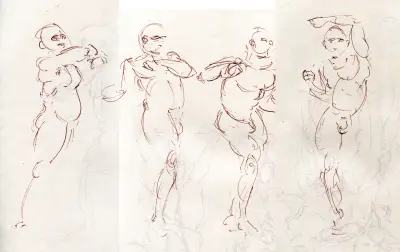
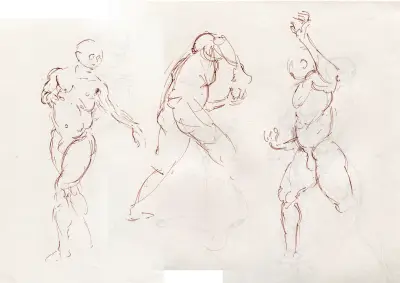
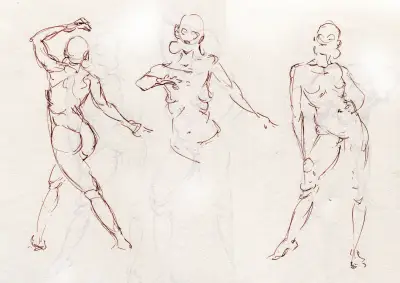
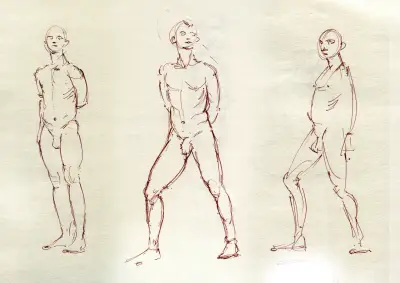
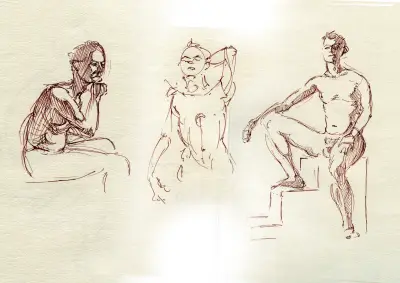
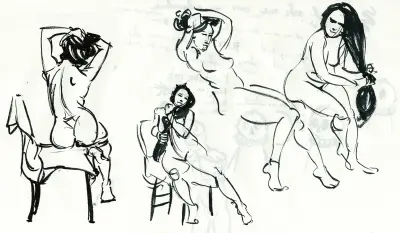
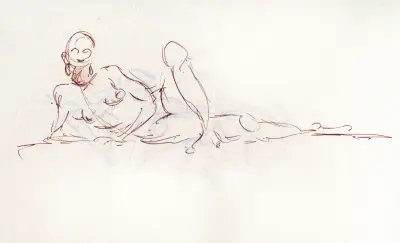
These ink and pen figure drawings were completed very rapidly, usually in a matter of seconds, in order to capture the way the forms of the human figure flow and move in space. This sort of drawing is an enjoyable challenge and a great way to improve figure drawing ability. As I practiced rapid figure drawing, I unconciously developed a short handfor the parts of the body in space. An example of this is the hand, which I often reduce to a line marking the box of the wrist, a curved line representing the arc of the knuckles, and ovals for the positions of each finger tip. This sort of figure drawing is less about optical accuracy then it is about capturing the structure and motion of a specific moment.
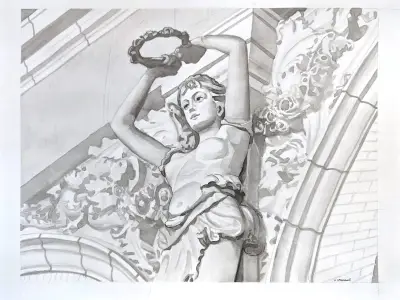
The drawing Five Points Station is an exception - this ink drawing was created slowly and carefully to depict the wonderful sculptures in Atlanta's Five Point MARTA Station. For this work, I slowly layered transparent washes of ink to gradually develop light and dark forms. Of course, statues do not move and have no trouble holding a pose for as long as the artist needs.
Figure Studies in Ink and Pen
Techniques for Ink Figure Drawing
There are as many ways to draw the figure in ink as there are artists, but I'm always happy to share the techniques I use in my own sketches. Let's look at some examples and build up from the simplest technique:
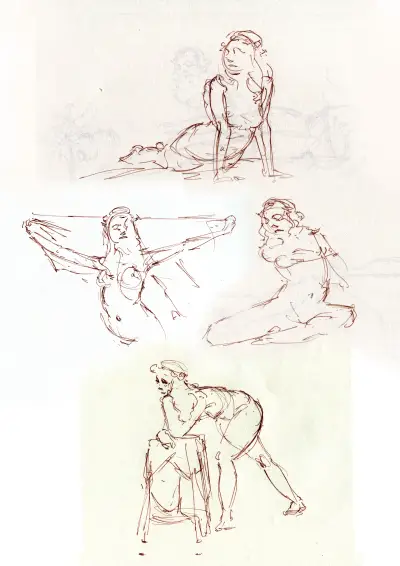
This first image is a composite of 4 figure gestures (rapid sketches meant to capture the rhythm and movement of the figure) from a single session. There is no need to purchase very expensive materials to do these sorts of sketches. In this case, I used an inexpensive fountain pen and Waterman brown ink. It would also be totally reasonable to use a dip pen, rollerball or felt-tip pens, or really any sort of material you have available. I like to switch between mediums with a 'classic' look and modern, bright mediums like chalk pastel or even highlighters.
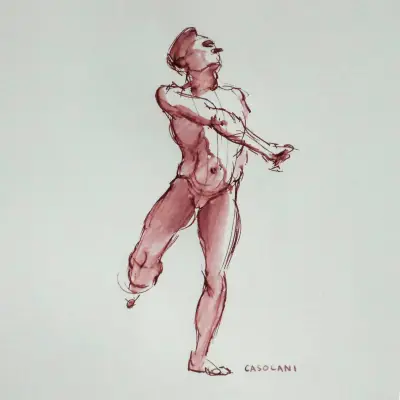
Here is a simple technique to add shading to your rapid figure drawings: the waterbrush pen. Waterbrush pens are refillable pens with a brush tip. They are made of a soft plastic, allowing you to control the amount of water flowing into the brush. They come in various shapes and sizes, and I have a few. My favorite is the Pentel Aquash, but they all work fine.
The technique is very easy: once you've put your lines down, use the brush to touch the linework slightly. This will dilute some of the ink from your drawing into the water from the brush, allowing you to push it around the page and add tonal washes wherever you like. I often touch my waterbrush directly to the nib of my fountain pen to 'charge' the brush with a controlled amount of ink, allowing for darker washes. Don't worry too much about blurring your lines - this is part of the excitement. In any case, as you practice you will gain more control over which lines you allow the water to touch.
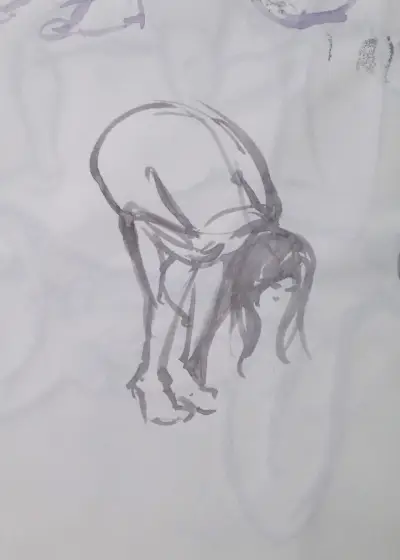
You could also skip the pen completely, and simply draw the lines with your waterbrush. This is a fun way to do your gestures with diluted colors, by either 'charging' the brush with a bit of ink from your pen (held in your off hand), or by filling the waterbrush itself up with diluted ink or watercolor.
As you become more comfortable with the ink pen and brush in sketching, you are also building some of the skills needed to do more involved work. Below is a rendering of a sculptural facade. For that piece, I carefully sketched the drawing in pencil (lightly!) and then carefully brushed in washes of black india ink, waiting for each layer to dry before adding the next.
With these simple techniques, you have a very good toolbox to study the figure in ink. Remember, when it comes to figure gestures, the rule is usually quantity over quality. For every one gesture you like, there will be 10 or 20 you want to hide away or throw in the fireplace. Gesture drawing is a learning process, and a process of building muscle memory, like an athlete's training. It is not meant to produce masterpieces, so never worry yourself about 'wasting' paper or ink. Occasionally you will make a dear little piece worth keeping around, but more importantly, you will be practicing and growing an artist's mind.